Dumpster Sizes
What Size Dumpster Do I Need? A Parker Homeowner's Sizing Guide
How cubic yards translate to pickup loads, why weight limits beat volume on dense debris, whether each size fits a real Parker driveway, and the HOA rules that decide the answer before you call.
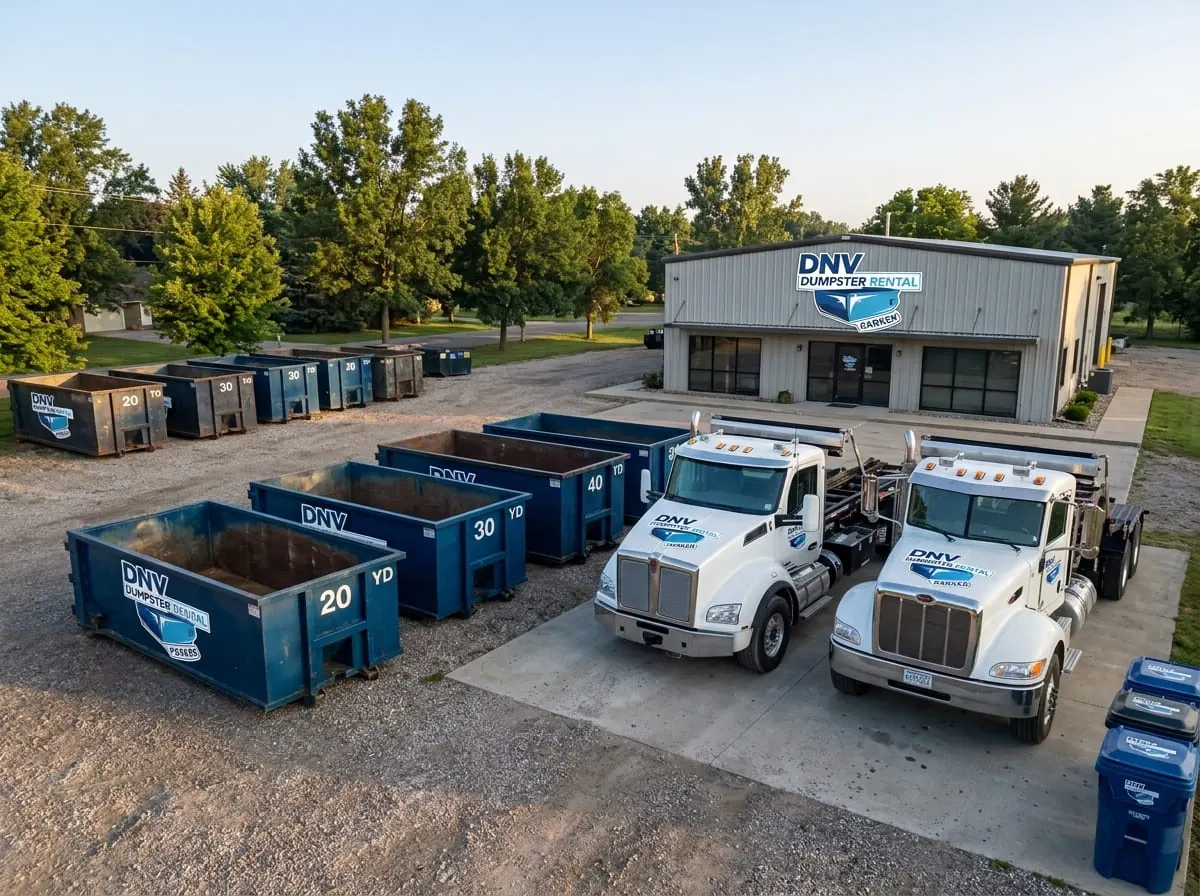
I have been dropping roll-offs in Parker since 2014, and the most common opening line on the phone is "I think I need a 30." Almost nobody has measured anything. They have looked at a pile in the garage, or a roof, or a basement full of builder-grade carpet, and picked a number that matches how big the job feels. Feel is a terrible unit. Half the time the guess is two sizes too large, and often it is too small in the only way that costs real money — weight.
Sizing works in a fixed order: volume, then weight, then footprint, then your HOA. Get those four in the right order and you will pick correctly the first time.
What a Cubic Yard Actually Looks Like
A cubic yard is a cube three feet on every side — 27 cubic feet. That is the unit every roll-off in the country is measured in, and it is why a "10 yard" and a "40 yard" are named the way they are.
Two translations make it real. First, pickup loads: one cubic yard is roughly one level load in a standard half-ton short-bed pickup, filled to the top of the box and no higher. So a 10 yard is about ten honest truckloads and a 40 is forty trips you are not making up Parker Road in traffic. Second, contractor bags: a 42-gallon bag, filled and tied, works out to about five or six bags per cubic yard once you account for air. That puts a 10 yard near 50 to 60 bags and a 20 yard near 110 to 120.
Those two conversions beat any online calculator. Our dumpster size comparison for Parker and Douglas County lays the same numbers out side by side.
Weight Versus Volume: The Mistake That Costs Money
Here is the part that catches people, and it catches contractors as often as homeowners. Every container has two limits, not one: the volume limit, and the weight allowance — what the truck, the axles and Colorado road law will let us legally carry away.
Those limits are almost never reached at the same time. Light bulky debris fills the box long before it gets heavy. Dense debris hits the weight ceiling while the container still looks two-thirds empty, and every operator in this market has a photo of a 30 yard with eighteen inches of concrete in the bottom that is already over. You did not get a bad deal on space. You bought a weight allowance and used all of it.
The rule: volume decides the size for light debris, weight decides the size for dense debris, and dense debris always wins the argument. If any meaningful part of your load is concrete, brick, tile, dirt, sod or rock, stop thinking about how the pile looks and start thinking in tons. That is what our concrete and heavy debris service exists for.
Footprints, and Whether They Fit a Real Parker Driveway
Cubic yards tell you capacity. They do not tell you whether the thing fits between your garage door and the sidewalk. Roll-offs get longer and taller as they get bigger while width stays close to eight feet, and the truck needs clearance beyond the box itself — roughly sixty feet of straight approach and about twenty-three feet overhead to raise the hoist and roll the container off.
| Size | Typical footprint (L x W x H) | Weight allowance | Pickup loads | Best for |
|---|---|---|---|---|
| 10 yard | ~12 x 8 x 3.5 ft | 1 to 2 tons | ~10 | Concrete, brick, tile, dirt, sod, landscape rock, small bath demo |
| 15 yard | ~14 x 8 x 4 ft | 1.5 to 2.5 tons | ~15 | Single-room cleanout, small deck, mixed light demo, tight driveways |
| 20 yard | ~20 x 8 x 4.5 ft | 2 to 3 tons | ~20 | Kitchen refresh, average roof tear-off, garage clear-out, mid-size deck |
| 30 yard | ~22 x 8 x 6 ft | 3 to 4 tons | ~30 | Basement finish, large roof, multi-room remodel, big estate cleanout |
| 40 yard | ~22 x 8 x 8 ft | 4 to 5 tons | ~40 | Bulky-light only: framing, siding, cabinetry, packaging, whole-house contents |
Allowances vary by load type and by what the scale says at the gate, so confirm yours when you book. Where this bites in Parker is the newer master-planned stock. A Stonegate or Canterberry Crossing apron is frequently short — twenty to twenty-four feet from garage door to sidewalk, sometimes on a slope, sometimes pinched by a landscape bed. A 20 yard at roughly twenty feet eats that entire apron. A 30 or a 40 does not fit at all without blocking the walk. The older lots around downtown Parker and Mainstreet often have deeper, flatter drives that swallow a 30 without complaint. Measure your own driveway; do not assume the neighbourhood.
Whatever size lands, ask for protection boards under the rails. Douglas County sits on expansive bentonite clay that heaves and cracks slabs on its own schedule, and freeze-thaw at this altitude finishes the job. Boards are standard on our trucks and we photograph existing condition on arrival — the reasoning is in our guide to protecting a driveway during dumpster delivery.
The HOA Constraint Is a Sizing Input, Not a Footnote
This is where Parker differs from the rest of the metro. Nearly every community here is covenanted — Stonegate, The Pinery, Clarke Farms, Stroh Ranch, Idyllwilde, Cottonwood, Pradera, Anthology, Horse Creek — and a great many of those covenants require driveway-only placement. No street. Some also cap how many days a container may sit, and some require architectural review approval before exterior work starts. A property can sit under both an HOA and a metro district, each with its own rules.
Driveway-only placement turns your driveway dimensions into a hard sizing ceiling. If the usable apron is twenty-two feet and the covenant forbids the street, the 40 is off the table no matter how much debris you have, and on plenty of Parker lots the 30 is too. That is not a preference, it is arithmetic. If the container has to go in the public right-of-way instead, that is a different conversation involving the Town of Parker or Douglas County, depending on who owns the road. The whole process is in our write-up on dumpster permits and HOA rules in Parker. Covenants get amended and boards change their minds, so confirm current requirements with your management company and the relevant agency rather than trusting last year's version.
Size by Project
| Project | Typical size | Watch for |
|---|---|---|
| Bathroom renovation | 10 yard | Tile, cast-iron tub and mortar bed push weight fast |
| Kitchen refresh | 15 or 20 yard | Cabinets are bulky-light; stone countertops are not |
| Basement finish | 20 or 30 yard | Drywall is heavier than its volume suggests |
| Single-room cleanout | 10 or 15 yard | Electronics are banned from Colorado landfills |
| Whole-house cleanout | 30 or 40 yard | Sort donations first or you pay to haul them |
| Roof tear-off | 20 or 30 yard | Layer count and shingle type drive tonnage |
| Deck removal | 15 or 20 yard | Concrete footings go in a separate 10 |
| Garage clear-out | 15 or 20 yard | Paint and chemicals stay out |
| Landscape / xeriscape | 10 yard | Sod, soil and rock are the heaviest debris here |
Roofing earns its own note because hail season drives so much of our volume. A single-layer architectural tear-off on an average Parker two-storey usually lands in a 20 yard roll-off; two layers, a steep pitch or heavy laminate moves it to a 30 yard. The square-count math is in our roofing tear-off dumpster size guide.
Size Up, or Take Two Hauls?
When you are genuinely between sizes and the debris is light, size up. The step to the next box is almost always cheaper than a second delivery, and an undersized container on a job with a deadline turns into a tarp, a pile and an HOA letter.
Take two hauls instead when the debris is dense enough that a bigger box would hit weight before it filled, when your driveway physically cannot take the next size, or when the job runs in phases — demo now, finish debris in three weeks. Next-day swap-outs make phased work painless, and two right-sized pulls beat one wrong one. A 15 yard container is the quiet hero of the short-driveway phased job.
The Douglas County Weight Traps
These materials override every other consideration. Landscape rock, gravel and road base run roughly 2,400 to 2,800 pounds per cubic yard. Broken concrete and flatwork sit in the same territory, along with brick, block and mortar, tile and thinset, sod with the soil still attached, and excavated dirt. Out on acreage, add rubber stall mats and arena sand — both far heavier than they look stacked in a barn.
Run the arithmetic once and it settles the argument: three cubic yards of landscape rock is around four tons. Three yards. That is eight inches in the bottom of a 30 yard box, and it is already at or past what the truck can legally carry off your street. This is why the answer for dense material is a 10 yard dumpster regardless of how big the job feels standing in the yard. Size down, keep the load clean and separated, and clean concrete goes off to be crushed into aggregate instead of buried.
Why the 40 Yard Is a Volume Container Only
The 40 yard roll-off stands eight feet tall and holds an enormous amount of air. It is the right call for framing lumber, siding, insulation, cabinetry, packaging and whole-house contents on an estate cleanout. It is the wrong call for anything dense, full stop — you will reach the weight ceiling with a third of the box empty and pay for space you could not use. Everything above chest height also has to be lifted over eight feet of sidewall — a real tax across a weekend.
Overfill and Level-Load Rules
Debris must sit level with or below the top rail. That is not a house preference — a load heaped above the rails cannot be tarped, and an untarped or overloaded container cannot legally leave your street. If the driver arrives to a mounded box, it gets knocked down or the pickup is rescheduled.
Load flat and heavy-first: dense material spread across the floor, long pieces laid in rather than stood up, voids broken down instead of stacked. A container packed properly holds noticeably more than one thrown into — often the difference between one haul and two.
Some things never go in a container at any size — paint and household chemicals, tyres, appliances with refrigerant, and asbestos-containing material of any kind. Parker's newer housing stock means asbestos comes up less than in older parts of the metro, but pre-1990s homes around downtown Parker, Sedalia and rural Douglas County still trigger inspection requirements under CDPHE rules before renovation or demolition. Thresholds are updated periodically, so verify current requirements with the state first. Leftover architectural paint goes to a PaintCare drop-off, and electronics are banned from Colorado landfills outright.
Or Just Describe the Job on the Phone
The fastest path is to skip the guessing entirely. Tell us the property type, what you are tearing out, roughly how much, what the material is, and how long your driveway is. Two minutes with somebody who has placed thousands of these containers around Parker beats an hour of measuring, and we will say plainly when a size is wrong for your driveway or when the honest answer is a smaller box.
DNV Dumpster Rental Parker has been doing that since 2014 out of 10002 Dransfeldt Rd, serving Parker, Douglas County and the south-east Denver metro with flat-rate pricing, protection boards as standard and same-day or next-day delivery on residential dumpster rentals. Describe your project and we will size it right the first time — call (720) 674-7845 or send the details through our contact page.
Questions this guide did not answer? Call (720) 674-7845. We would rather spend two minutes on the phone than have you order the wrong container.