Cleanouts
The Weekend Whole-Home Cleanout: A Room-by-Room Plan for Parker
A practical room-by-room plan for clearing a Parker home over two weekends, covering realistic timelines, the Colorado garage, basement storage, HOA container limits, right-sizing your roll-off and what Colorado will not let you throw away.
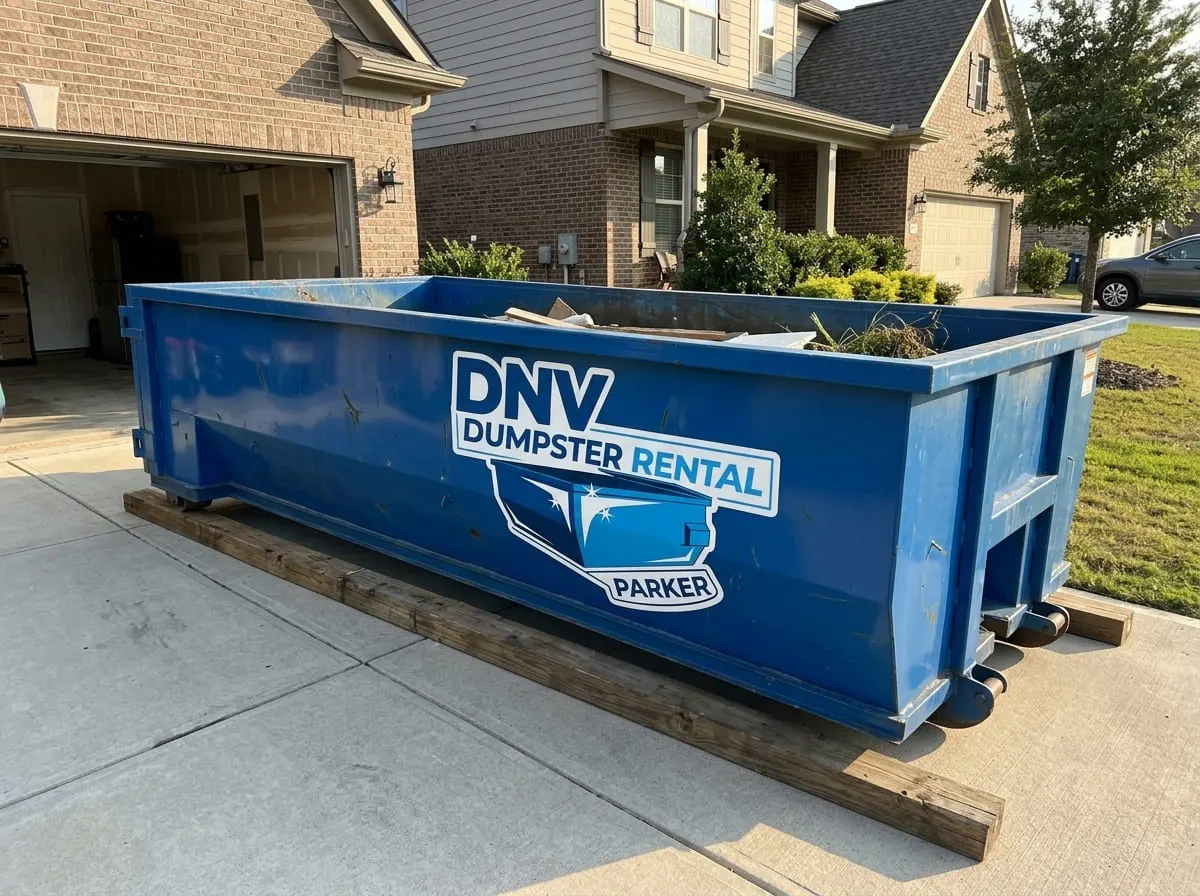
A whole-home cleanout looks like a Saturday and turns into a project. We have been dropping containers in Parker driveways since 2014, and what separates the cleanouts that finish from the ones that stall in the basement is never effort. It is the plan, the sizing, and whether anybody read the covenant first.
This is for a household still living in the house: decluttering, downsizing before a move, or clearing out before listing. Clearing a family home after a death is a slower job with its own estate cleanout checklist. This one you can attack.
The honest time budget
A full house is not one Saturday, and for most people it is not one weekend either. Plan two weekends, or three consecutive days with real help. Volume is not what slows you down — deciding is. Hauling a broken treadmill upstairs takes four minutes; deciding whether to keep it takes eleven days if you let it.
A three-bedroom Parker home with a finished basement and a two-car garage runs twenty to thirty working hours for two people. A third body is worth about forty percent, mostly because stairs stop being the bottleneck. Have the box delivered the evening before you start; a cleanout with nowhere to put things is just moving piles around.
Sequence it so momentum builds
Do not start in the basement. Everybody starts in the basement, because the basement is the problem, and everybody quits four hours later surrounded by open bins of photographs.
Start with a fast, visible win and low emotional weight — the linen closet, the pantry, the cabinets above the fridge. Forty minutes each, immediate before-and-after. Then bedrooms and baths, the garage, the basement, and attic and crawlspace last. Garage before basement is deliberate: those decisions are obvious, and clearing it gives you the staging area the basement needs.
Room by room: time, volume, and where people get stuck
| Room or zone | Realistic time | Typical volume | What people get stuck on |
|---|---|---|---|
| Kitchen and pantry | 3–4 hours | 1–2 cu yd | Appliances that still technically work |
| Bedrooms (each) | 2–3 hours | 1–2 cu yd | Clothes that will fit again someday |
| Kids' rooms and playroom | 3–5 hours | 2–4 cu yd | Toys sentimental to the parent |
| Bathrooms and linen closets | 1–2 hours | Under 1 cu yd | Nothing. Do these first. |
| Home office and paper | 4–8 hours | 1–2 cu yd | Shredding and undated tax records |
| Garage | 6–10 hours | 4–8 cu yd | Costly gear used once a year |
| Finished basement | 8–12 hours | 5–10 cu yd | Exercise gear, "sort later" bins |
| Storage or utility room | 3–5 hours | 2–4 cu yd | Leftovers from the last project |
| Attic | 2–4 hours | 1–3 cu yd | Decorations, and the heat |
| Crawlspace | 1–3 hours | 1–2 cu yd | Finding a volunteer to go in |
| Shed and side yard | 2–4 hours | 2–5 cu yd | Half-bags of concrete, mystery lumber |
The Colorado garage is its own category
Nothing in a cleanout guide written for Ohio prepares you for a Front Range garage. Ours accumulate a specific, expensive kind of clutter, and it is the biggest volume surprise in a Parker cleanout.
Count what hangs on your walls and rafters. Skis and snowboards, two generations of them, plus boots that fit nobody. Bikes — road, gravel, mountain, the kids' outgrown fleet, and one that has been a project since the Obama administration. Tents, sleeping bags, pads, camp chairs, two coolers too many. Climbing gear and ropes past their retirement date. A roof box the size of a canoe. Hunting and fishing kit. Kids' sports equipment by the crate — cleats in six sizes, lacrosse sticks, hockey bags handled with tongs.
And the paint shelf. Every Front Range garage has one, thirty to sixty cans deep, most a quarter full and dried to a puck after twenty unheated winters. Paint does not go in the container.
Two rules keep the garage from eating your weekend. Ski and bike gear has resale value only if it is current — past ten years old it is a donation, not a listing. And get it all onto the driveway before deciding. You cannot judge four bikes hanging in the air; you can judge four standing in a row.
The basement, which in Parker means a real room
Parker's housing stock is mostly 1990s through 2010s and the basements match: big, finished or half-finished, with a storage room, a utility room and often a fourth bedroom. Not a damp cellar with a few boxes. That is why it is the ten-hour room.
What comes out is predictable. Defunct exercise equipment leads every time — the treadmill, the elliptical, the weight bench under a blanket, the spin bike used as a coat rack. Break these down first; a whole treadmill eats a corner of the box and leaves air under it. Then CRT-era electronics, old office furniture, the replaced sectional, holiday storage, and bins labelled in a hand you no longer recognise. Half-finished basements add drywall offcuts and leftover tile. Clean wood and scrap metal get recovered rather than buried — see our rundown of recycling and disposal in Douglas County.
Attic and crawlspace, last and fast
Do the attic early. A Parker attic in July is punishing by ten o'clock, and dehydration at altitude sneaks up on people. Mask on, watch your footing on the joists, and pass everything down to a second person rather than carrying it down the ladder. In the crawlspace, bring a light and gloves and check the vapour barrier and pipe insulation.
The four-box method, and touching each item once
Four destinations, physically separated before you begin: keep, donate, sell, bin. Blue tape and a marker on four corners of the room is enough. The discipline that makes it work is simple and hard — you touch each item once. It goes in a box the first time you pick it up. No maybe pile; that is how a cleanout becomes a rearrangement. Allow yourself one undecided bin for the whole house, not one per room.
When a room is done, the donate and sell items leave it immediately. Anything that stays put gets re-evaluated, and re-evaluation always goes the same way.
Be realistic about resale
This is where most cleanouts lose a fortnight. Something worth listing has to clear a bar: enough money to justify the photos, the listing, four messages from people who never show up, and standing in the driveway on a Tuesday evening. In practice: current ski and bike gear, quality power tools, name-brand camping equipment, solid-wood furniture, anything collectible. What does not clear it: particleboard furniture, old televisions, mattresses, exercise equipment, printers, expired car seats.
Set a hard deadline. Anything unsold when the container leaves goes to donation or in the box. Otherwise you have not decluttered, you have opened a low-volume retail operation in the driveway.
Where donations actually go
Sort by who takes what. Clothing and household goods go to the thrift operations along Parker Road and Lincoln Avenue, several of which schedule furniture pickups and save you loading twice. Cabinets, doors, building materials and working appliances go to a habitat-style reuse centre. Sports gear moves through youth-sport exchanges; books go to library sales. Call ahead on anything large — a rejected load at 4pm Sunday ruins a good day.
Check the covenant before you book anything
This is the Parker-specific part, and the one people skip. Nearly every community here is covenanted — Stonegate, The Pinery, Canterberry Crossing, Clarke Farms, Stroh Ranch, Idyllwilde, Cottonwood, Pradera, Anthology, Horse Creek — and a property can sit under both an HOA and a metro district. Rules typically cap how many days a container may sit and require driveway-only placement, never the street.
The failure mode is predictable: someone books a three-day rental for a job that takes two weekends, runs long, and collects a violation letter. Read the covenant first, then book a generous window — extending in advance is easy and quiet. Our guide to dumpster permits and HOA rules in Parker goes through it, and the Town of Parker covers the municipal side. Rules get amended, so confirm with your own association.
Sizing: usually a 20, sometimes a 30
A three-bedroom Parker home typically fills a 20 yard roll-off. A larger one with a full finished basement, or a garage of the calibre described above, wants a 30 yard container. Household junk is bulky and light, so you run out of space long before weight — the opposite of a concrete or roofing job. Between sizes, size up. Our dumpster sizing guide for Parker has the dimensions.
One container plus a swap beats two containers on site. Two boxes means two driveway footprints, two sets of HOA days ticking, and a tighter squeeze on turning room. A next-day swap-out puts an empty box in the same spot without doubling your parking problem. On a two-weekend cleanout the rhythm is fill it, swap midweek, finish.
What cannot go in the container
- Electronics. Colorado bans TVs, monitors and computers from landfills — e-waste event or certified recycler only.
- Paint and stain. That shelf goes through PaintCare drop-off sites — latex, oil-based, stain and varnish.
- Household chemicals. Solvents, pool chemicals, pesticides, automotive fluids and fuel go to the Douglas County household chemical roundup. Check the schedule early.
- Refrigerant appliances. Fridges, freezers, window AC units and dehumidifiers need certified recovery first.
- Batteries. Lithium-ion especially. Loose cells start fires in trucks and transfer stations.
- Tires and propane. Tires to a recycler; propane cylinders to an exchange or hazardous waste site, empty or not.
- Asbestos-containing material. Rare in newer Parker stock, live in older downtown Parker and Sedalia homes. CDPHE Regulation No. 8 requires a certified inspection before disturbing trigger amounts, and we cannot accept it.
These requirements change, so confirm with the county or CDPHE before hauling. The full list is in what can and cannot go in a dumpster in Douglas County.
Loading so the box holds what it should
- Break everything down. Flat-pack comes apart in three minutes; collapse every box. A disassembled sectional takes a third of the space.
- Heavy and flat on the bottom. Mattresses, table tops, doors, plywood and headboards make a level floor.
- Fill voids as you go. Bags of clothing and soft goods are packing material. Stuff every gap as it appears.
- Work in layers, front to back. Do not build a mountain at the gate. Walk material to the far end first.
- Level with the top rail. Nothing above it — an overloaded container cannot be tarped or legally hauled, and that delays your swap.
Staging so the driveway still works
The container sits on the driveway on protection boards — standard on our deliveries, and worth caring about, because Douglas County's expansive bentonite clay heaves and cracks driveways on its own schedule. Photograph the existing condition when the box lands; see our notes on protecting your driveway during delivery. Set it to one side so a car can get past, leave a walking lane from the garage door to the gate, and keep sell and donate piles in the garage, not behind the box where the truck needs room to hook.
Keeping it cleared
The cleanout is the easy part. Three habits hold: one-in-one-out for the categories that breed, especially bikes and camping kit; a garage pass every October before the ski gear comes out; and a permanent donation bin that goes when it fills. If part of the job is bigger than a weekend, that is what junk removal in Parker and residential dumpster rental are for.
Ready to get started? Call DNV Dumpster Rental Parker at (720) 674-7845. We will size the container to your house, work around your HOA's day limit, and have it on the driveway before your first Saturday starts — locally owned since 2014, flat-rate pricing, protection boards standard, next-day swap-outs.
Questions this guide did not answer? Call (720) 674-7845. We would rather spend two minutes on the phone than have you order the wrong container.