Waste Guide
What Can (and Can't) Go in a Dumpster in Douglas County
A straight accepted-materials guide for Parker and Douglas County: what loads without question, what Colorado bans from landfills, where each banned item actually goes, and why asbestos and heavy debris get their own rules.
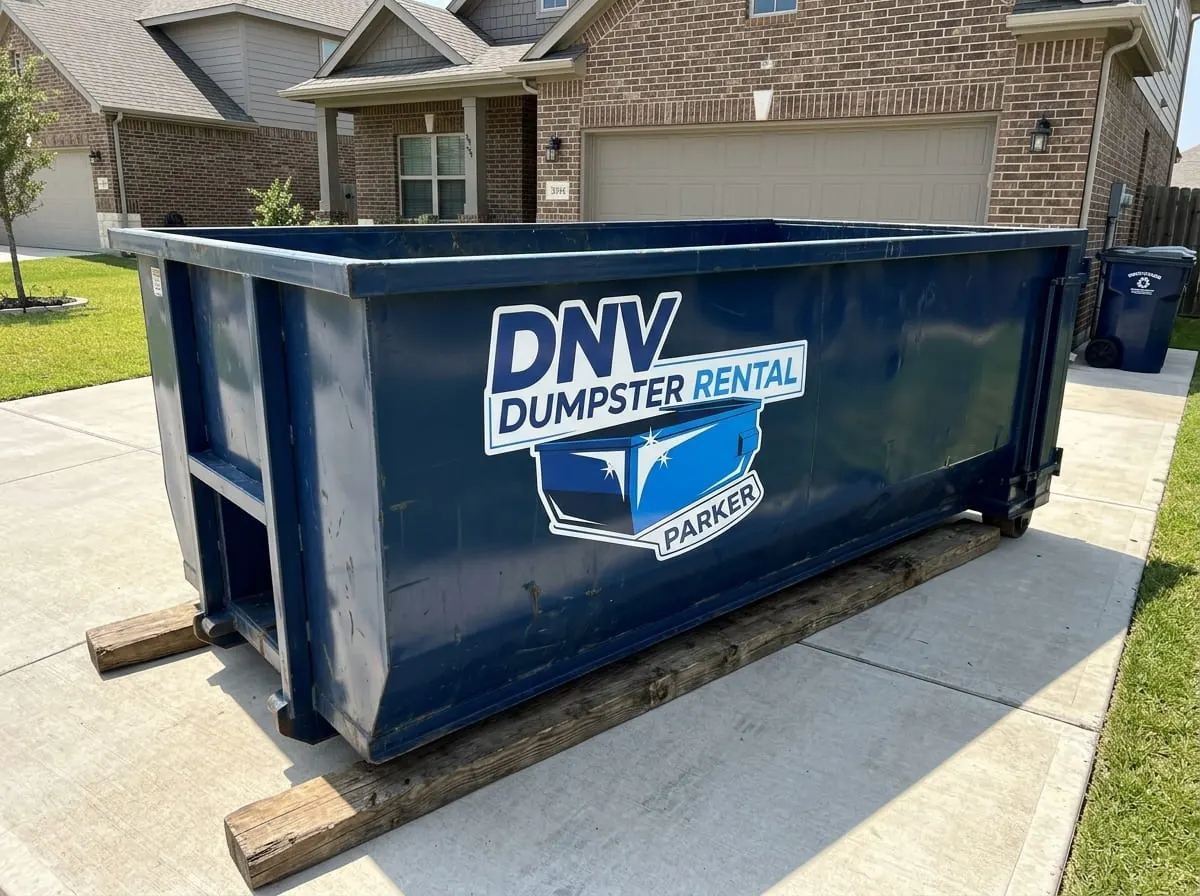
Almost everything you carry out of a Parker garage, basement or back pasture goes straight into a roll-off. The list of things that cannot is short, but it does not bend. Colorado bans several common household items from landfill disposal outright, the state has its own asbestos rule with teeth, and every facility we tip at screens loads at the gate.
Since 2014 we have set containers in Stonegate, Clarke Farms and Pinery driveways and on gravel drives toward Franktown. Here is what we take, what we cannot, and where the banned items go instead.
What always goes in, no questions asked
If it came out of a house, garage, deck or roof and it is dry, solid and non-hazardous, it is almost certainly fine.
- General household junk. Boxes, clothing, books, paperwork, kitchenware, the whole contents of a storage room, which is most of any estate cleanout in Parker.
- Furniture and mattresses. Couches, bed frames, dressers, box springs. Mattresses eat volume, so count them when picking a dumpster size.
- Carpet, pad and tack strip. Roll it and tie it; loose carpet wastes a third of the box.
- Drywall, lath and plaster. Standard on any basement finish or builder-grade bath gut.
- Lumber and framing. Studs, joists, subfloor, trim, deck boards, railing, fence panels and pallets. Clean untreated wood is recovered, not buried.
- Cabinetry, countertops, doors and windows. Laminate, tile and stone tops are fine in reasonable quantity.
- Roofing. Shingles, felt, ice-and-water shield, drip edge and rotten decking. After a hail season this is most of what we haul, and a roofing tear-off dumpster loads differently.
- Yard debris. Branches, brush, shrubs, leaves, old fence pickets. Bulk green waste runs better as a dedicated yard waste removal load, and mitigation slash on the Larkspur and Perry Park fringe belongs in a slash-mulch program, not a container.
- Appliances with no refrigerant. Washers, dryers, dishwashers, ranges, ovens, water heaters, furnaces.
- Small amounts of clean concrete. A busted walkway section mixed into a demolition load is fine. Volume changes the answer.
What we cannot take, and where it goes instead
Everything below is banned from Colorado landfills by statute, refused by the facility, or unsafe in a truck. None of it is a judgment call on our end.
Electronics
Colorado has prohibited waste electronic devices from landfill disposal since 1 July 2013 under Title 25, Article 17 of the state statutes: televisions, monitors, desktops, laptops, tablets, printers, DVD players, game consoles and most peripherals. Landfills screen for it. Douglas County and its municipalities run collection events through the year, and private e-waste recyclers operate across the south metro. Start at CDPHE for the current list.
Paint and stain
Colorado runs a paint stewardship program, so leftover coatings are easy. PaintCare takes latex and oil-based house paint, primers, stains, sealers, shellac and varnish free at retail drop-off sites, several of them paint and hardware stores in Parker and Castle Rock. Containers must be five gallons or smaller, label intact, lid on, not leaking. It does not take thinners, solvents, aerosols, roof patch, tar or two-part epoxies. Find a site through PaintCare. Latex dried rock-hard in an open can is usually fine, but ask first.
Household chemicals and pesticides
Douglas County sponsors a Household Chemical Roundup with the fire, water and sanitation districts and the municipalities. It has run appointment-only, typically at the Douglas County Fairgrounds in Castle Rock, with a per-vehicle charge and proof of residency. It takes solvents, garden and household chemicals, pesticides, gasoline and extinguishers, but not business waste, electronics, sharps, asbestos, tires, flares or explosives. Dates, sites and the reservation line change yearly, so check Douglas County first.
Motor oil, antifreeze and fuels
Used oil is prohibited from Colorado landfills, and free liquids of any kind are refused at the scale. Auto parts stores around Parker take used oil and filters; antifreeze, gasoline and diesel go to the roundup. Empty, dry, lid-off containers can ride.
Batteries
Lead-acid batteries are specifically banned from Colorado landfills. Any auto parts retailer takes a car, tractor or mower battery, usually with a core credit. Lithium-ion is the one that scares haulers: tool packs, e-bike batteries, laptop cells and vapes start fires when crushed. Those go to a battery or hardware store collection point. Never bury one in a load and hope.
Tires
Waste tires are prohibited from Colorado landfills and we cannot take them. Tire retailers accept them for a recycling fee, and the county holds periodic tire events. Tractor and loader tires need a licensed waste tire hauler.
Propane tanks and pressurised cylinders
Grill tanks, camping cylinders, helium and oxygen bottles, acetylene, CO2 cartridges and old extinguishers are all a no; a sealed cylinder becomes a projectile on a tipping floor. Exchange programs take grill tanks, welding suppliers take their own bottles, and the roundup takes small cylinders and extinguishers.
Refrigerant appliances
Refrigerators, freezers, window and portable air conditioners, wine coolers, dehumidifiers and heat pumps hold refrigerant a certified technician must recover under federal Clean Air Act Section 608 rules before the shell is scrapped. See the EPA on certified recovery. HVAC contractors and scrap yards handle it; once evacuated and tagged, the shell rides.
Fluorescent tubes and CFLs
Four and eight-foot tubes out of a basement or barn, plus CFLs, contain mercury and belong at a hardware store take-back, not in a box where they shatter. LED and incandescent bulbs are fine.
Medical sharps
Needles, lancets and syringes are a real hazard to the crew tarping and unloading. They need a rigid sharps container and a pharmacy take-back. Check nightstands and bathroom drawers first.
Ammunition, flares and explosives
Live rounds, reloading powder, primers and old road or marine flares do not go in a dumpster, and the roundup will not take them. The Douglas County Sheriff's Office handles that. Call them, do not improvise.
Quick reference: where each item goes
| Item | In the dumpster? | Where it goes instead in Douglas County |
|---|---|---|
| Furniture, mattresses, household junk | Yes | Standard mixed load |
| Carpet, drywall, lumber, cabinets | Yes | Standard load; clean wood recovered |
| Asphalt shingles and roof decking | Yes | Dedicated roofing load |
| Yard debris and brush | Yes | Green waste load; slash to slash-mulch |
| Washer, dryer, range, water heater | Yes | Standard load; metal recovered |
| TVs, monitors, computers, printers | No | E-waste recycler or county collection event |
| Latex and oil-based paint, stain, varnish | No | PaintCare drop-off site, no charge |
| Solvents, pesticides, pool and garden chemicals | No | Douglas County Household Chemical Roundup |
| Motor oil, filters, antifreeze, gasoline | No | Auto parts take-back or roundup |
| Lead-acid batteries | No | Auto parts retailer, core credit |
| Lithium-ion tool, e-bike and laptop packs | No | Battery or hardware store collection bin |
| Tires, car through tractor | No | Tire retailer or a county tire event |
| Propane, helium, oxygen, acetylene cylinders | No | Exchange program, gas supplier or roundup |
| Fridges, freezers, AC units, dehumidifiers | Only after certified recovery | HVAC tech or scrap yard evacuates and tags it |
| Fluorescent tubes and CFLs | No | Hardware store take-back or hazardous collection |
| Medical sharps | No | Sharps container to a pharmacy or clinic |
| Ammunition, powder, flares | No | Douglas County Sheriff's Office |
| Asbestos-containing material | Never, under any circumstances | Colorado-certified abatement contractor only |
| Treated posts, railroad ties, creosote timbers | No | Facility accepting treated wood; call ahead |
| Manure, bedding, stall waste | No | Composting or land application |
| Concrete, brick, tile, rock, dirt, sod | Dedicated container only | Clean concrete to a crusher as aggregate |
Programs and rules change. Confirm anything unusual with the relevant agency, your HOA, or us before it goes in the box.
Asbestos: the hard stop
This one has no workaround. We cannot accept asbestos-containing material in any container, under any circumstances, in any quantity. Not bagged, not wetted, not "just a little."
Colorado regulates asbestos under CDPHE Regulation No. 8, which requires inspection by a Colorado-certified asbestos building inspector before renovation or demolition disturbing more than the trigger amounts, and licensed abatement for anything found. The inspection comes first, before the container and before the sledgehammer. Testing a popcorn ceiling costs a fraction of a stop-work order and a re-clean.
Parker's housing stock helps. Most of this town went up between the 1990s and the 2010s, so a first-refresh basement finish in Stroh Ranch or Idyllwilde is unlikely to turn up asbestos. The risk lives in older structures: downtown Parker Mainstreet, Sedalia, Louviers, and farmhouses out east. Suspect textured ceilings, nine and twelve-inch vinyl tile and its black mastic, pipe and duct wrap, boiler insulation, transite siding and old roofing felt. If your building is that age and you are planning a demolition debris project, get it inspected. Regulation No. 8 is amended periodically, so verify current trigger levels with CDPHE or a certified inspector.
Heavy material needs its own container
Weight, not volume, stops a truck. Concrete, brick, block, tile, stone, landscape rock, sod and dirt run a ton or more per cubic yard, so a 20 yard box half full of concrete is already past what a roll-off can legally carry down Parker Road. Axle weight limits are not negotiable.
So heavy material goes in a dedicated 10 yard dumpster, loaded low and level, never mixed. That is not an upsell, it is the only configuration that leaves legally.
The other half of the rule is the good news. Clean concrete kept separate is cheaper than mixed debris, because it is not waste at all. Broken slab, sidewalk, patio and footing goes to a crusher and comes back as recycled aggregate and road base. Add drywall scrap, plastic sheeting and a few fence boards and the whole load reclassifies as mixed debris bound for a landfill. Our concrete and heavy debris service exists for that split, and the Douglas County recycling and disposal guide covers what else gets diverted.
Acreage and horse property items
Out past The Pinery, through Franktown, Elizabeth and Kiowa, the list changes, and a few items catch people out on barn and acreage cleanouts.
- Treated fence posts, railroad ties and creosote timbers: no. Pressure-treated posts, old CCA lumber, ties and creosote timbers are chemically treated wood and need a facility that specifically accepts it. Call ahead before you pull a mile of fence line.
- Manure, bedding and stall waste: no. Muck and soiled shavings are agricultural waste, not construction debris. They belong in a compost pile, spread under a management plan, or with an agricultural hauler.
- Scrap steel: pull it and sell it. Corral panels, T-posts, field wire, gates, sheet roofing and pipe are worth money at a scrap yard, and burying them costs you twice. Separate the steel, run the rest in the container.
What happens if a banned item turns up
Nothing dramatic, and nothing free. Loads are screened at the gate and again on the tipping floor. If a banned item turns up, the load is flagged, the facility charges a special-handling or contamination fee, and that passes through to the account the container is on. Anything that has to be pulled and hauled elsewhere is a second trip.
The knock-on is worse than the fee. A flagged load ties up the truck, which pushes the next delivery and the swap-out behind it. In a market where your HOA gives you a fixed window to have a container in the driveway, a lost day matters. Our guide to Parker permits and HOA rules covers those limits.
When in doubt, ask before it goes in
Every question on this list takes thirty seconds on the phone and can save a contamination fee, a lost day, or in the asbestos case something worse. We would far rather answer a question about one paint can than deal with a flagged load. The rental FAQ covers the routine ones.
Call DNV Dumpster Rental Parker at (720) 674-7845 and tell us what you are clearing out. We will tell you straight what goes in, what has to go elsewhere and which size fits, then set a container on flat-rate pricing with protection boards, same-day or next-day. You can also send photos of the pile through our contact page.
Questions this guide did not answer? Call (720) 674-7845. We would rather spend two minutes on the phone than have you order the wrong container.