Recycling
Where It Actually Goes: Recycling and Disposal in Douglas County
A straight look at what happens to your container after we pull it, which Douglas County materials genuinely get recovered, which get buried, and how separating on site cuts your own disposal cost.
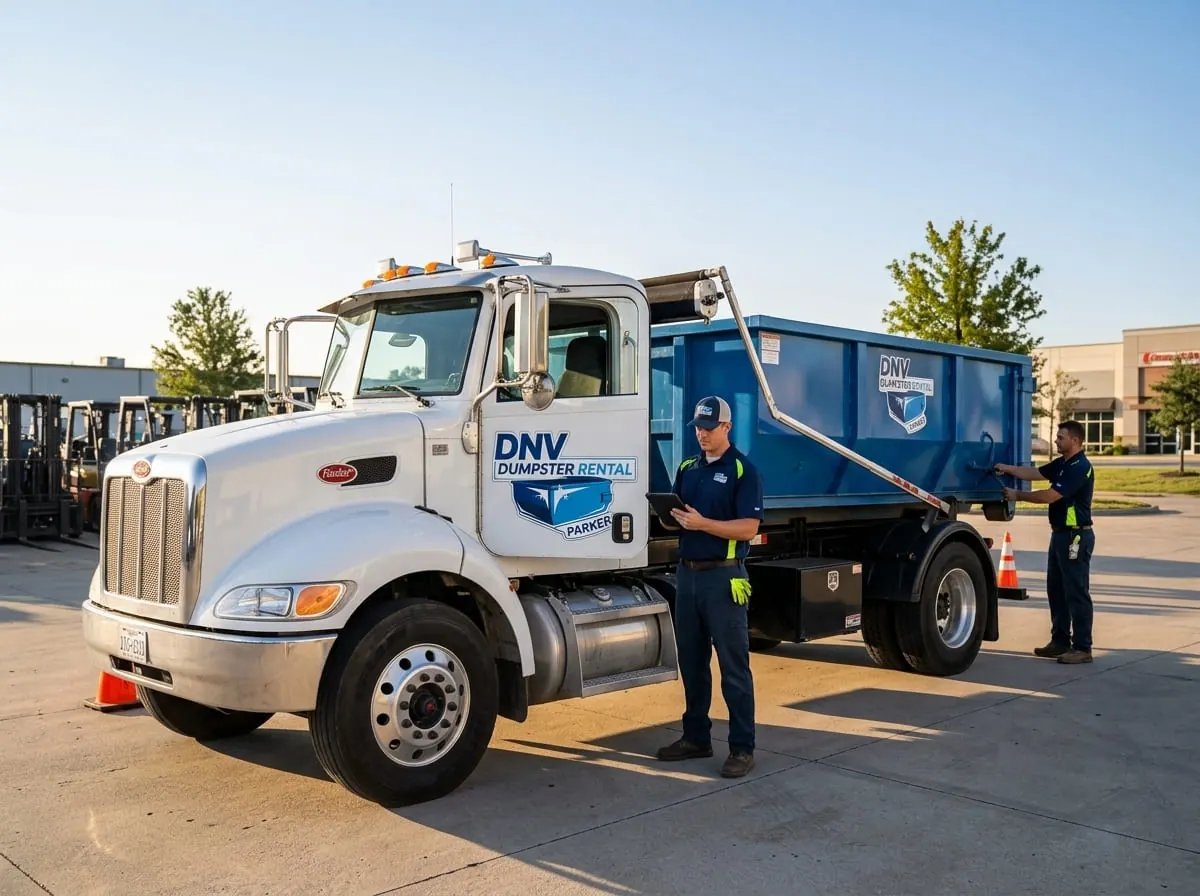
Every few weeks somebody asks the driver, half joking, whether we just haul it around the corner and dump it in a hole. Fair question, and most haulers will not answer it — which tells you something. I have been running roll-offs in Parker since 2014. A container leaving your driveway on Hilltop Road or Crowfoot Valley Road goes through more steps than people imagine, and those steps decide whether your debris becomes road base or buried tonnage.
What Happens After We Pull the Container
First is a scale. Every legitimate facility here weighs the truck loaded in and empty out; the difference is your tonnage. That ticket is the most important document in this business, and it is why a container of wet shingles behaves nothing like the same volume of drywall and cabinet doors.
Second is the sort question, and this is the part nobody explains. The facility makes one call: clean single-material load, or mixed? A clean load is exactly what it sounds like — concrete and nothing else, metal and nothing else, untreated wood and nothing else. Those go to a recovery line or a crusher. Mixed loads go to a tipping floor, where a machine picks out whatever is worth pulling — a bathtub, a run of copper, a few sheets of plywood — and the remainder is pushed to the working face and buried.
That is the whole economics in one sentence: sorting after the fact is expensive, so almost nobody does it thoroughly. Sorting before the fact costs nothing but a little discipline on site.
Why Parker Has No Transfer Station of Its Own
People assume the Town of Parker runs a dump. It does not. Douglas County does not operate a landfill either — its public works guidance points residents to regional facilities and tells them to make their own arrangements, and there is no county curbside trash service. This is a private-hauler market with county programmes layered on top for material landfills should not take.
In practice, Douglas County material routes to a handful of regional sites. Mixed construction and household waste heads to the Sedalia landfill west of town or the Denver Arapahoe Disposal Site past Aurora. Clean concrete and asphalt go to crushing operations instead, some of them portable rigs. Scrap metal goes to yards along the I-25 and US-85 corridors. Clean green waste goes to the county slash-mulch site in Sedalia or composting operations near Castle Rock.
The destination is chosen by what is in the box, not by who is driving it — two 30-yard containers pulled from the same street on the same morning can end up eight miles apart. Confirm hours, fees and accepted materials with Douglas County before planning around them.
What Genuinely Gets Recovered
Here is the honest version. Five streams have real, reliable recovery value here:
- Clean concrete, asphalt, brick and block. Crushed and screened into recycled aggregate and road base. Douglas County's bentonite clay chews up driveways and patio slabs, so we move a lot of it. It needs its own box, and a small one — see our concrete and heavy debris service — because a large container of slab is over legal axle weight long before it is full.
- Scrap metal. Ferrous and non-ferrous both have a market: appliances, ductwork, corral panels, T-posts, field wire, flashing, copper, aluminium. On acreage and barn cleanouts toward Franktown, metal is often the largest recovered stream by weight.
- Clean untreated wood. Framing lumber, pallets, untreated boards — ground for mulch, fuel or engineered product. Untreated is doing all the work there. Pressure-treated deck boards and painted trim are not in this stream, which matters on deck removal jobs.
- Cardboard. Sounds trivial until an appliance and cabinet install leaves a third of your container volume as corrugated. Break it flat, keep it dry.
- Clean green waste and slash. Branches, leaves, grass, needles, shrubs, sod, weeds — composted or mulched rather than buried, provided it stays clean.
Everything else — drywall, insulation, carpet and pad, shingles, treated lumber, mixed plastics, tile, laminate, most furniture — is landfilled here, and I would rather say that plainly. Shingles come up constantly after hail season; asphalt shingle recycling exists in some markets but is not a routine outlet on the Front Range, so plan a roofing container around disposal and use our tear-off sizing guide.
Material by Material: Where It Actually Goes
| Material | Recovered or landfilled | Where it goes locally |
|---|---|---|
| Clean concrete, asphalt, brick, block | Recovered | Regional crushers; recycled aggregate and road base |
| Scrap metal, ferrous and non-ferrous | Recovered | Metal yards along the I-25 and US-85 corridors |
| Clean untreated lumber and pallets | Recovered | Wood grinding for mulch, fuel or engineered product |
| Cardboard and clean paper | Recovered | Recycling processors; town drop-off programmes |
| Branches, leaves, grass, slash | Recovered | County slash-mulch site, Sedalia; area composting |
| Appliances without refrigerant | Recovered | Scrap metal yards |
| Refrigerators, freezers, AC units | Recovered after degassing | Certified technician first, then scrap yard |
| TVs, monitors, computers, printers | Recovered — landfill banned | County electronics recycling; retail take-back |
| Leftover paint, stain, varnish, sealer | Recovered | PaintCare drop-off sites at participating retailers |
| Motor oil, antifreeze, solvents, pesticides | Household hazardous waste | County household chemical programme; some auto parts stores take oil |
| Lead-acid batteries | Recovered | Auto parts and battery retailers, core-return programmes |
| Tires | Recovered | Tire recyclers and retailers; never in a roll-off |
| Asphalt shingles | Landfilled here | Sedalia landfill or Denver Arapahoe Disposal Site |
| Drywall, insulation, carpet and pad | Landfilled | Regional landfill working face |
| Treated, painted or composite lumber | Landfilled | Regional landfill working face |
| Asbestos-containing material | Neither — hard stop | Licensed abatement contractor, permitted disposal only |
Treat that as a planning tool, not a guarantee — markets move and facilities revise what they accept. Our Douglas County dumpster rules guide covers the container side in depth.
Colorado Programmes and Restrictions
The electronics landfill ban
Colorado prohibits landfill disposal of electronic devices — televisions, monitors, desktops, laptops, printers. Not a fee, a ban, and it applies to households and businesses alike. Douglas County now runs electronics recycling for residents year-round rather than only at occasional events. On an estate cleanout this is the first pile we ask you to build — one old rear-projection TV can hold up a whole container.
PaintCare
Colorado has a paint stewardship programme, so leftover architectural paint has a free outlet. PaintCare drop-off sites — mostly paint and hardware retailers, several a short drive from Parker Mainstreet — take latex and oil-based house paint, primers, stains, sealers and clear finishes in original labelled containers. They generally do not take aerosols, solvents and thinners, or industrial coatings.
The Douglas County household chemical programme
What longtime residents still call the Household Chemical Roundup has become a year-round, appointment-based household hazardous waste service under the county's GreenWorks programme, free to residents with proof of residency. It takes paints and coatings, automotive fluids including motor oil and antifreeze, garden chemicals, household cleaners and solvents, and common battery chemistries, with per-visit size and volume limits.
What it does not take matters just as much: explosives, ammunition and fireworks, radioactive material, medical waste, propane tanks and gas cylinders, fire extinguishers, asbestos, light bulbs, and anything leaking or unlabelled. Confirm with the county before you drive over.
Refrigerant appliances, tires, batteries and oil
Refrigerators, freezers, window units and heat pumps hold refrigerant that federal rules require be recovered by a certified technician before the shell is scrapped, so they are handled separately rather than tipped. Tires, lead-acid batteries and motor oil are excluded from roll-offs and all three have retail take-back routes.
Wildfire Mitigation Slash
On the wooded fringe — Larkspur, Perry Park, the Pinery edge, Roxborough — defensible-space work generates enormous volumes of slash: bulky, light, almost pure recoverable material. The county slash-mulch site in Sedalia takes branches, limbs, leaves, needles, cones, shrubs, sod and weeds from residents and gives ground wood chips back free as supply allows. It will not take lumber, stumps, dirt, fencing, wood with nails, wire or construction debris, and it is a residents' programme, not a contractor drop.
When the material is genuinely clean slash and you can haul it, the county site beats a container. A container earns its place on mixed clearing jobs — slash plus old fence, a collapsed shed, wire — where sorting cost exceeds the savings. That is what our yard waste removal service is for, and Colorado State Forest Service guidance is worth reading first.
Asbestos: A Hard Stop, Not a Recycling Question
We cannot take asbestos-containing material in any container, at any size, at any price. That is a compliance decision, not a recovery one. Under CDPHE Regulation No. 8, renovation or demolition disturbing more than the trigger amounts requires inspection by a Colorado-certified asbestos building inspector first, and abatement by a licensed contractor if material is present. Parker's stock is largely 1990s to 2010s, so this comes up less here than elsewhere in the metro — but downtown Parker, Sedalia, Louviers and the rural farmhouses are a different story. Popcorn ceilings, vinyl floor tile and mastic, duct wrap and pipe insulation are the usual suspects. Confirm current thresholds with CDPHE, which revises them periodically.
How to Separate on Site and Cut Your Own Cost
Separating is a cost decision that happens to have a good environmental outcome. Clean loads tip at recovery facilities rather than landfills; a mixed box with slab buried in it gets landfill pricing on all of it. Five habits do most of the work:
- Stage before you load. Four ground piles on a tarp: metal, clean wood, cardboard, everything else. Twenty minutes of planning beats four hours of picking.
- Pull the banned items first. Electronics, paint, chemicals, tires, batteries, refrigerant appliances — these are what stall a pickup.
- Keep concrete alone. One chunk of drywall in a slab load can reclassify the whole box.
- Keep it dry. Rain and snow add weight you pay for, and wet cardboard and wood stop being recoverable. Tarp overnight.
- Load heavy low and flat. Better weight distribution, more usable volume, and nothing above the rail, which we cannot legally haul.
When does a second container actually pay for itself? Roughly when you have more than a couple of tons of a single clean stream — a full driveway tear-out, a whole-house metal pull, a big framing job. Below that the extra delivery eats the savings and one well-loaded box is the right answer. Sequencing one container through a same-day or next-day swap often beats two on site at once, especially where HOA rules on placement and duration in Stonegate, Canterberry Crossing or Stroh Ranch cap how long anything sits on a driveway. Our construction debris disposal guide is the fastest way to get oriented.
Why We Sort Instead of Just Tipping
Straight answer: the alternative is worse for everyone, us included. Landfill airspace here is finite and being consumed fast as Douglas County grows, tip fees only move one direction, and recovered concrete, metal and wood have buyers. Routing a clean load to a crusher instead of the working face lowers the cost of that job — which is why our pricing stays flat instead of creeping every year.
There is a simpler reason too. I live here. Burying clean slab under Douglas County ground when it could be road base under a Douglas County street is a poor trade, and after thirteen years I have not found a good argument for it.
One caveat, plainly: facility hours, fees, appointment requirements and accepted-material lists change, sometimes with little notice. Confirm specifics with Douglas County, the Town of Parker, CDPHE or PaintCare before building a schedule around them, and confirm placement rules with your HOA or metro district before delivery day.
If you want the container matched to what you are actually throwing away, and a straight answer about where it ends up, call DNV Dumpster Rental Parker at (720) 674-7845. Dane and the crew have been sorting Douglas County debris since 2014 — 10 through 40 yard roll-offs, protection boards standard, same-day and next-day delivery across Parker and the south-east metro. Tell us the job on our contact page and we will say honestly which parts are worth separating and which are not.
Questions this guide did not answer? Call (720) 674-7845. We would rather spend two minutes on the phone than have you order the wrong container.